Demand across the HVACR industry remains strong. From system retrofits and energy-efficiency upgrades to ongoing service contracts and new construction, opportunities are not the issue. Yet many contractors are finding that profitability is not keeping pace with workload.
Two operational issues are quietly driving this disconnect: change-order misalignment and slow-pay cycles.
Individually, each creates friction. Together, they introduce financial blind spots that often go unnoticed until late in a project, when margin is already compressed, and options are limited.
Where Change Orders Start to Erode Margin
Change orders are a normal part of HVACR work. Field conditions shift, equipment availability changes, and design adjustments happen as projects move from plan to execution. In many cases, these changes are necessary and expected.
The problem is not the volume of change. It is how it is tracked.
In many HVACR firms, change orders live across disconnected tools and conversations. A technician flags a scope change on site. A project manager logs it in a project management system. Supporting details sit in email threads. Meanwhile, finance teams often only see the change once it is finalized, if it is captured at all.
This fragmentation creates gaps between what is happening in the field and what is reflected financially.
The impact is subtle but significant. Change orders can increase project costs by 10 to 15 percent, yet delays in documentation, approval, or billing mean those costs are not always fully recovered. Some are underpriced. Others are invoiced late. A few are missed entirely.
By the time the project reaches review or closeout, margin erosion has already occurred.
The Growing Pressure of Slow-Pay Cycles
At the same time, HVACR contractors are navigating increasingly complex payment cycles.
Progress billing is often tied to milestones, inspections, or general contractor approvals. Retainage is standard. Payment terms can stretch well beyond the pace at which costs are incurred.
While this dynamic has long been part of construction, its impact is becoming more pronounced. Industry estimates suggest slow and inconsistent payments cost construction firms hundreds of billions annually. For HVACR contractors managing multiple projects, the effect is cumulative.
Labor, materials, and subcontractor costs are paid in real time. Cash inflows are not.
This mismatch creates pressure on working capital. Contractors may rely more heavily on lines of credit, delay investments, or limit the number of projects they can take on, even when demand remains strong.
The Real Issue: Disconnects Between Systems
It is easy to treat change-order challenges and slow-pay cycles as separate issues. In practice, they are often symptoms of the same underlying problem: lack of alignment between operational and financial systems.
Estimating, project management, and accounting frequently operate in silos.
Field teams track progress and changes in one system. Project managers manage timelines and scope in another. Finance teams handle billing and job costing in a separate platform. Information moves between these systems manually, often with delays.
This creates lag between reality and visibility.
A change order may be identified in the field today but not reflected in job costing until weeks later. Billing may trail actual progress. Leadership teams rely on WIP reports or month-end close to understand performance, by which point the data is already outdated.
The result is reactive decision-making in an environment that demands precision and speed.
What High-Performing HVACR Contractors Do Differently
Contractors that maintain strong margins in this environment tend to prioritize real-time financial visibility across the project lifecycle.
This shift is less about adding tools and more about connecting the systems already in place. When project and financial data are aligned, teams can act earlier and with more confidence.
This is reflected in how leading organizations operate:
- Change orders are standardized and captured in the field, the same day, using workflows that automatically route for approval and update job costing. No email chains, no manual entry at week's end
- WIP reporting reflects current project status, not a two-week-old snapshot from the last close cycle
- Progress billing triggers are built into the workflow, so invoicing follows milestones automatically rather than waiting on someone to remember to pull the report
- Finance and operations share a single data layer, so when a project manager flags a cost overrun, the controller sees it simultaneously and not at month-end review
The impact is practical. Change orders are priced and billed faster. Issues are identified earlier. Cash flow becomes more predictable.
We’ve handled a similar situation in many organizations, like New England Lead Burning Company (NELCO). Operating across manufacturing, construction, and field services, the company faced challenges with fragmented systems that limited visibility into WIP, labor, and project costs. Financial reporting lagged behind operations, with insights delayed by up to two weeks. By unifying project and financial data, NELCO gained real-time WIP tracking and accurate job costing across divisions. This allowed teams to identify cost overruns earlier, align billing more closely with project progress, and reduce margin leakage tied to delayed or incomplete change-order capture.
Another similar challenge we solved was for Euro-Can Enterprises. The challenge was managing visibility across 40 to 60 concurrent projects. Project costing, billing, and reporting were spread across QuickBooks, Excel, and time-tracking tools, with updates often delayed. This limited insight into WIP and contributed to slower billing cycles. After consolidating operations into a unified system, Euro-Can gained real-time visibility into project performance and automated billing workflows. The result was faster invoicing, improved cash flow, and earlier detection of cost overruns across active jobs.
Practical Steps to Close the Gap
For many HVACR firms, addressing these challenges does not require a full transformation. It starts with a few focused changes:
- Standardize change-order capture so that all field and office teams follow the same process
- Connect project and financial data to reduce manual handoffs and delays
- Align billing workflows with project progress rather than delayed reporting cycles
- Increase visibility into key metrics such as committed costs, pending change orders, and accounts receivable by project
These steps help ensure that what is happening on site is reflected quickly and accurately in financial outcomes.
Protecting Margin in a Complex Environment
The HVACR industry is not short on opportunity. But as projects grow more complex and payment cycles lengthen, operational discipline becomes a critical differentiator.
Change-order fragmentation and slow-pay cycles are not new challenges, but their impact is amplified in environments where information is delayed or disconnected.
Contractors that address these visibility gaps are better equipped to protect margin, maintain healthy cash flow, and scale with confidence.
In a market where demand is strong but margins are tight, knowing where you stand at any moment in a project can make all the difference.
Closing: Turning Visibility into a Competitive Advantage
For HVACR contractors, the challenge is no longer just winning work. It is executing profitably in an environment where costs move quickly and payments do not.
Change orders and slow-pay cycles will always be part of the business. What separates high-performing firms is how early they can see the impact and how quickly they can respond.
When financial and operational data are aligned in real time, decisions improve. Change orders are captured and billed before they become losses. Cash flow becomes more predictable. Leadership gains the clarity needed to manage multiple projects without relying on hindsight.
The contractors that move in this direction are not just protecting margin. They are building a more resilient operation that can handle complexity, scale with confidence, and compete more effectively in a tightening market.
In the end, visibility is not just about reporting. It is about control.
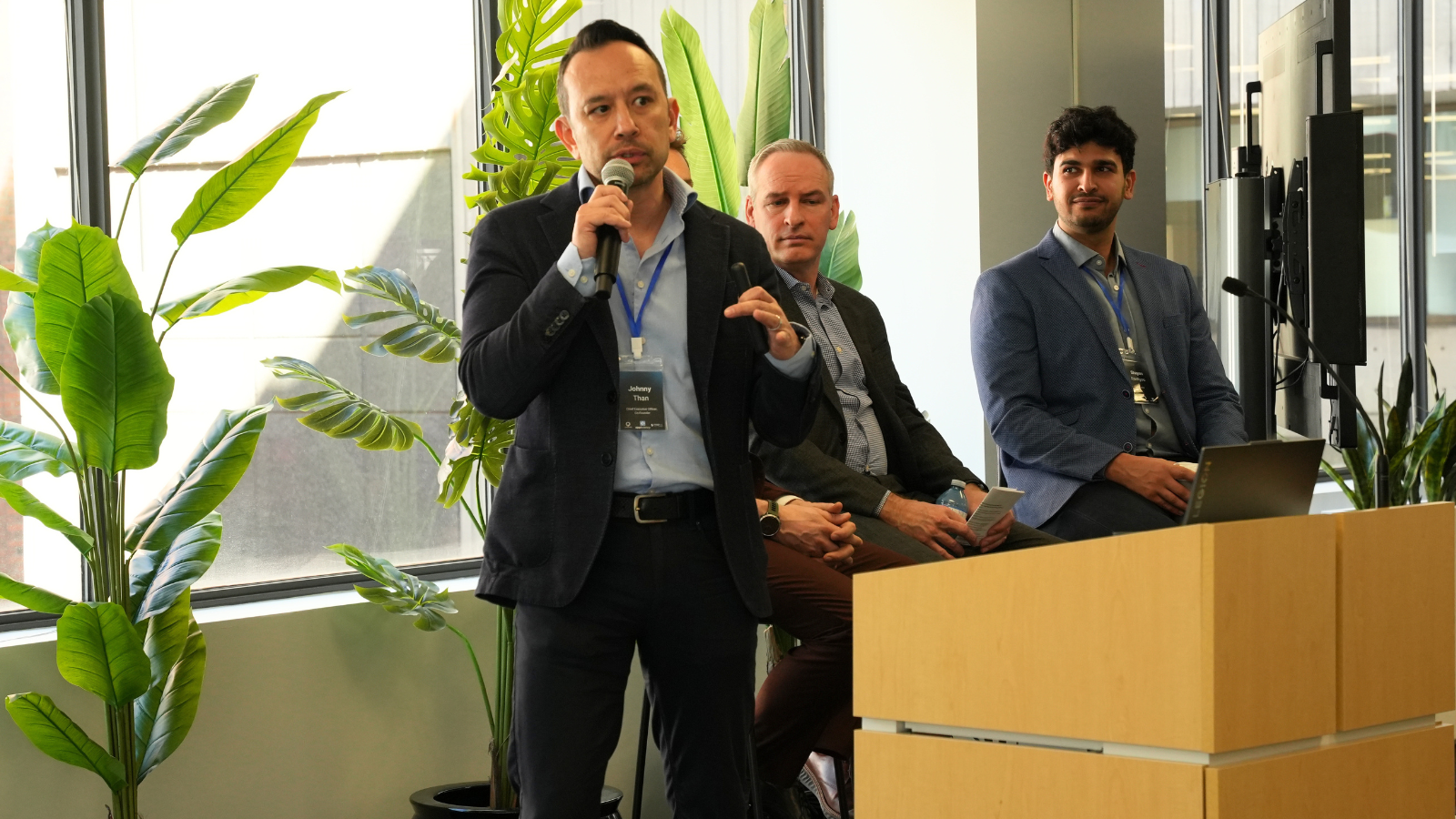
Johnny Than is the CEO and founder of Appficiency, where he helps organizations improve operational visibility and financial performance through modern enterprise systems. With more than 30 years of IT and business technology experience, he has advised more than 300 mid-market and Fortune 500 companies. He holds an MBA from McMaster University.

Learn how HVACR contractors can reduce margin erosion, improve cash flow, and boost profitability by streamlining change orders and project financial visibility.
Learn how HVACR contractors can protect profit margins by improving change-order management, accelerating billing, and gaining real-time financial visibility.